

In March 2026, Requiem, the soundtrack of Project: Catalepsy, received a Silver Medal at the European International Music Awards in the Best Video Game Music EP category. What makes this particularly unusual is that Project: Catalepsy did not have a public prototype at the time. There was no trailer, no release date to announce, and most of the game was still being developed by an independent team. Its music, however, had already reached an international jury of professionals and received recognition.
Two months later, in May, Rogueliker.com had the opportunity to hear part of the soundtrack before anyone else. We gave them two tracks, Praeco Umbrae and Via Mortis, as an exclusive preview, allowing them to hear for the first time a small part of what we were building. At that point, the prototype was still not publicly available and most of Catalepsy could not yet be shown. Now, however, you no longer have to wait to hear these two pieces.
Two Tracks, Two Ways Into the Abyss
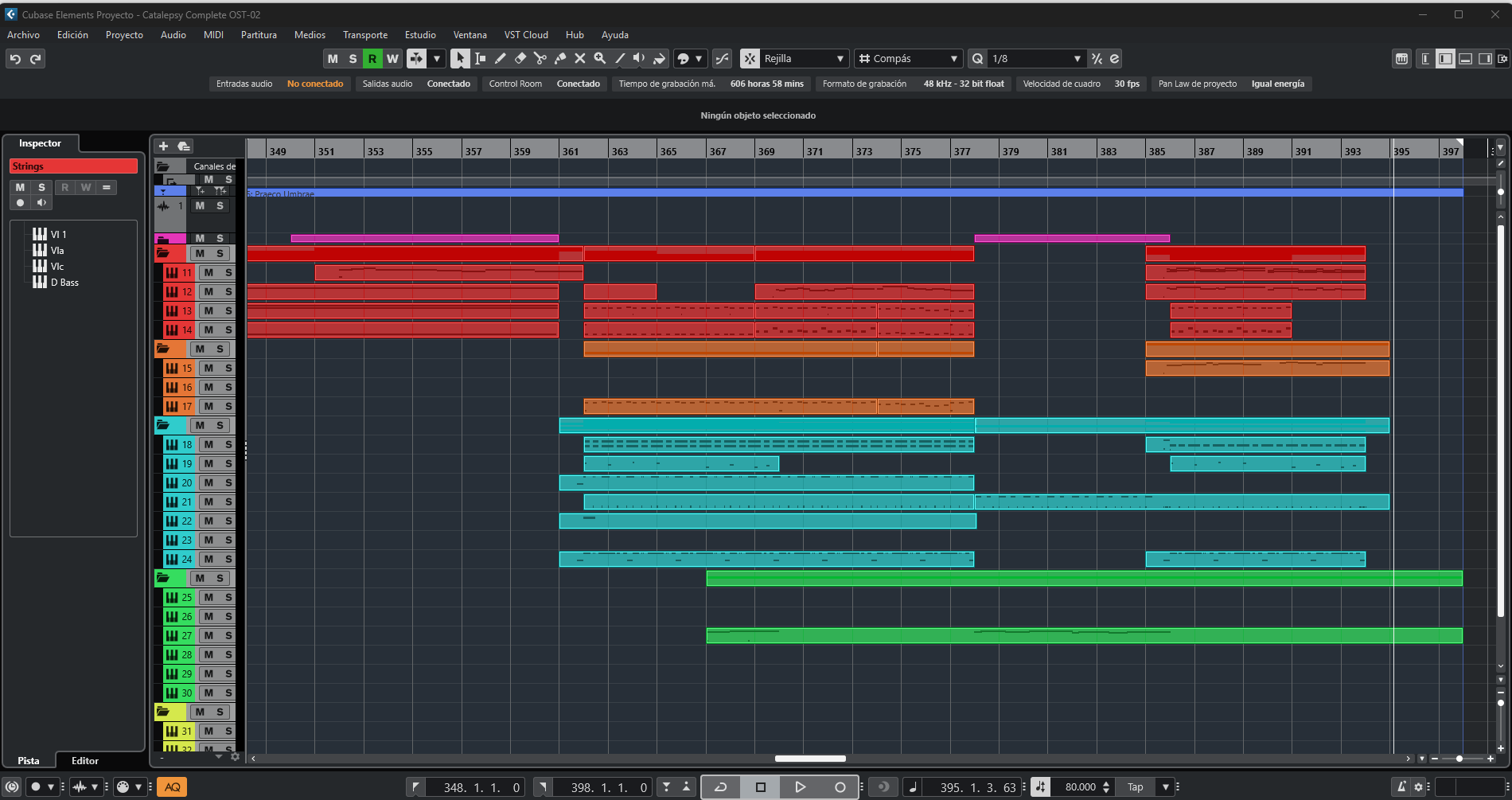
Praeco Umbrae is one of the tracks associated with the Morador, the protagonist of Project: Catalepsy, and was composed with combat in mind. The piece combines military-style percussion, bells and a choir that gradually builds into a wall of strings, creating a sense of pressure and forward momentum intended to accompany the confrontation rather than simply sit in the background. It represents one of the more aggressive sides of Requiem and shows how the game's musical identity can be built around a single idea and then pushed into a different context.
Via Mortis, on the other hand, works from a much more restrained idea. The track is only 36 seconds long, using heavy percussion and a wordless choir before suddenly fading away. When Rogueliker heard it without knowing the context in which it would be used, they described the feeling it created as a sense of dread and compared it to certain sensations that Skyrim can evoke. We had not explained what they were listening to or what role the track would have in the game, which makes that reaction particularly interesting: the piece managed to communicate a specific feeling without the support of visuals, gameplay or narrative context.
A Soundtrack Built Before the Game
The story of Requiem becomes even more unusual when you look at how its composition began. José Conejero worked on the soundtrack without finished gameplay to build the tracks around; there were no completed combat sequences to score, no levels to explore and no narrative scenes to use as reference. Rather than starting with a situation from the game and turning it into music, he began with something that had existed from the very beginning: the name Project: Catalepsy.
The soundtrack's central melody was mathematically derived from the title itself. That initial structure became the foundation for developing the rest of the EP and allowed the same musical identity to reappear in different contexts. The melody does not remain identical across every track; instead, it is transformed to fit different situations, from exploration to combat and boss encounters, while retaining recognizable elements of what came before.
This is an unusual way to approach a video game soundtrack. In many projects, music develops around what happens on screen: a particular level, character, battle or narrative moment can become the starting point for a composition. With Requiem, the process began before that visual and playable material existed. First came a mathematical structure derived from the game's title; from that structure came the melody, and from there the rest of the soundtrack began to take shape.
The idea also has a natural connection to the structure of Catalepsy itself. A roguelike is built from systems and rules that can generate different situations from a shared set of elements, and Requiem follows a similar logic in its musical identity: a recognizable structure that can transform and take on different forms without losing its connection to the whole.
José Conejero's First Video Game Soundtrack
Requiem is also the first video game soundtrack composed by José Conejero. Working from Ontinyent, Valencia, José began creating the music for Project: Catalepsy while the game was still far from being ready for public release, building a collection of pieces designed to cover different situations within the project.
In March 2026, that soundtrack received a Silver Medal at the European International Music Awards in the Best Video Game Music EP category. In May, two of its tracks were heard by Rogueliker as an exclusive preview. All of this happened before the public could play Project: Catalepsy and before we were ready to show the prototype we are currently developing.
That gives Requiem a somewhat unusual place within the project: it is a finished part of a game that is still taking shape. The music already has an identity, has been heard outside the team and has received recognition, while the game it will ultimately accompany is still being prepared for the public.
Where Are We Now?
Project: Catalepsy still does not have a public prototype, and that has not changed. We are using this stage to finish the prototype, refine its core systems and build a version that we can eventually show publicly. The first playable prototype is planned for the final quarter of 2026, and when that happens, Requiem will finally meet the game it was created for.
Until then, the soundtrack is one of the few parts of Catalepsy that we can show in full without asking you to imagine how it works. You can hear the combat, tension and atmosphere that José began building before the game itself was ready to be shown.
The game is still to come, but its music has already begun its journey.
See you in the underworld.